


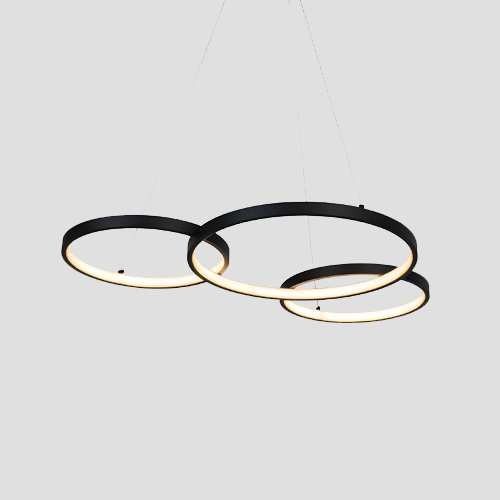
Good home lighting has almost nothing to do with how many watts you throw at a room, and almost everything to do with how many separate light sources you can control. The most common mistake in a British home is leaning on one bright ceiling light — the dreaded “big light” — to do everything, which flattens the room and kills any atmosphere. The fix is to stop thinking about a single light and start thinking in layers.
Done properly, a layered scheme lets you turn the same room from bright-and-practical at breakfast to low-and-warm at 9pm, using fittings you already like. Here’s how to plan it, room by room, and the one wiring decision that makes or breaks the whole thing.
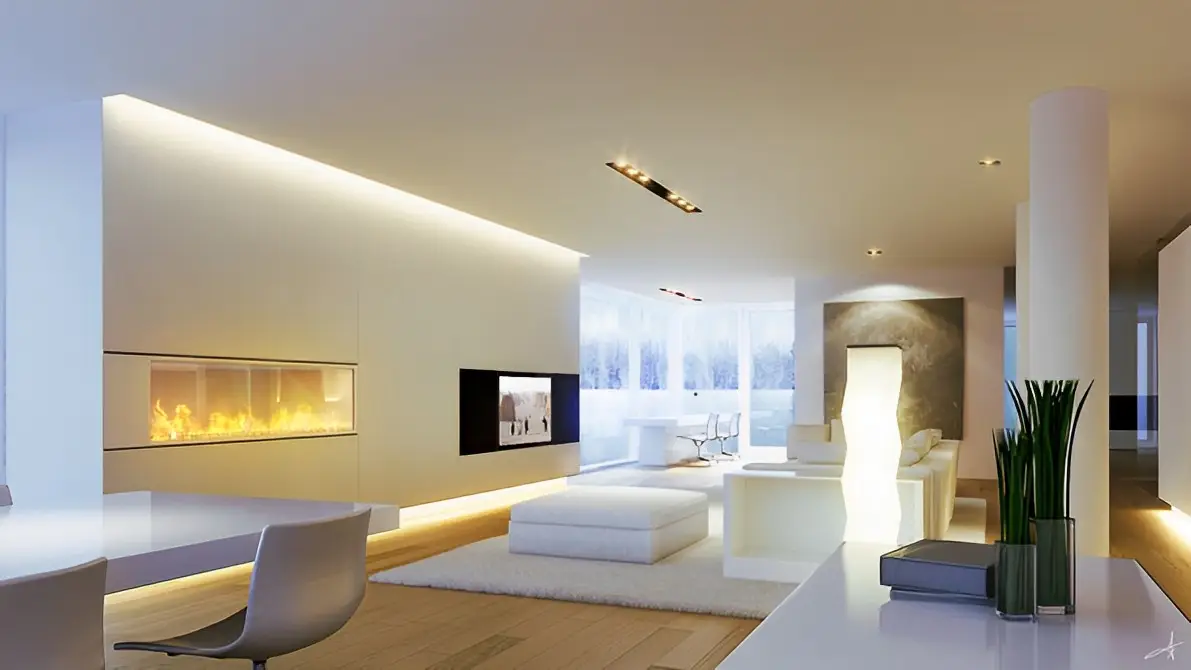
The three layers of good home lighting
Every well-lit room is built from three layers. Most people fit the first, sometimes the second, and forget the third — which is exactly the layer that makes a room feel designed rather than merely lit.
Ambient — the base
The general fill that lets you move around safely: ceiling lights, downlights, or a large pendant. It should be soft and even, not one harsh central source doing all the work.
Task — the working light
Focused light where you actually do things: over a kitchen worktop, beside a reading chair, at a desk or a bathroom mirror. Under-cabinet strips, adjustable spots and a good table lamp all count.
Accent — the atmosphere
The layer people skip. Wall lights, picture lights, a lamp in a far corner, a strip tucked into an alcove or under a shelf. It has almost no practical job — it exists to add depth, shadow and warmth. Without it, a room looks flat even when it’s bright.
The trick isn’t buying more lights. It’s having at least three sources in a room, each doing one job, so you can dial the whole space up or down.
The mistake that ruins a layered scheme
You can buy the loveliest lamps in the world and still end up with bad home lighting if they’re all wired to one switch. Layers only work if you can control them independently — and that decision is made at first fix, before the plasterboard goes on, not when the lights arrive.
Two rules save most of the pain:
Put each layer on its own switch. Your ambient, task and accent layers should sit on separate switched circuits, so you can have accent-only in the evening without the main light blazing. Retro-fitting this after decorating means chasing walls, so plan it early with your electrician.
Dim everything you can. In a modern scheme, every circuit that can dim, should — ideally from full down to around 10%. That single feature is what turns “bright kitchen” into “quiet late-night kitchen”. Use LED-compatible trailing-edge dimmers and check your bulbs are marked dimmable; not all LEDs are, and a mismatched dimmer causes flicker and buzz. A smart lighting system takes this further, letting you save whole-room “scenes” that recall a layer mix at a tap.
Get the colour temperature consistent
Nothing makes a carefully layered room look broken faster than mixing colour temperatures. If your downlights are 4000K cool white and your lamps are 2700K warm white, the room reads like two rooms fighting.
Pick one warm white and stick to it across a living space — 2700K to 3000K. Save cooler 4000K for genuinely task-heavy spots like a kitchen worktop or a bathroom mirror, and avoid 6000K “daylight” indoors altogether; it reads clinical. The Energy Saving Trust puts 2700K in living areas and bedrooms, with cooler tones reserved for kitchens and bathrooms.
One more spec worth checking is CRI, or colour rendering. A CRI of 80+ is fine for general rooms; push to 90+ where colour matters — a kitchen, a dressing area, anywhere you look closely at food, fabric or your own face. And there’s no running-cost penalty for any of this: LEDs use around 80% less electricity than the old halogens and last up to 20 times longer, so a fully layered home costs pennies an evening.
Home lighting room by room
The three layers stay the same; the emphasis shifts from room to room.
Living room
Where layering matters most. A large feature pendant or ceiling light for ambient, a couple of table or floor lamps for task and warmth, and wall lights or a corner lamp for accent. Light the walls, not just the floor — and keep the central light dimmable and, honestly, off most evenings.
Kitchen
Bright and even for prep, cosy for eating. Downlights or a ceiling light for ambient, under-cabinet strip lights or spots over the worktop for task, and pendants over an island to zone the space. Wire the island and worktop lights separately from the main downlights.
Bedroom
Warm and low. A soft ceiling light or pendant for ambient, bedside lamps or wall lights for reading, and maybe a discreet strip under the bed or behind the headboard for late-night navigation. Keep it 2700K throughout, and dimmable.
Hallways and bathrooms
Usually forgotten. A hallway wants a welcoming wall light or two rather than one flat ceiling fitting; a bathroom needs bright, cooler task light at the mirror plus a warmer, softer layer for a long bath. Check bathroom fittings carry the right IP rating for their zone.
A simple home lighting plan
- Aim for at least three light sources in every main room — ambient, task and accent — not one central light.
- Put each layer on its own switch, and decide this at first fix, before the walls are closed up.
- Make every circuit you can dimmable, down to around 10%, with LED-compatible trailing-edge dimmers.
- Choose one warm white per room: 2700–3000K for living and sleeping spaces, up to 4000K only for kitchen and bathroom task light.
- Use dimmable-rated bulbs and 90+ CRI where colour matters, and match IP ratings in bathrooms.
- Light the walls and features, not just the floor — that’s what creates depth.
The bottom line
If you do only one thing, do this: stop wiring rooms to a single switch. The difference between a flat room and a beautiful one usually isn’t the fittings — it’s whether you can light one layer without the others. Plan the switching first, keep the colour temperature consistent, and add the accent layer everyone forgets.
Building a scheme? Browse our indoor lighting range and mix the layers to suit each room. Free UK delivery over £50, with tailored warranties on every fitting.