


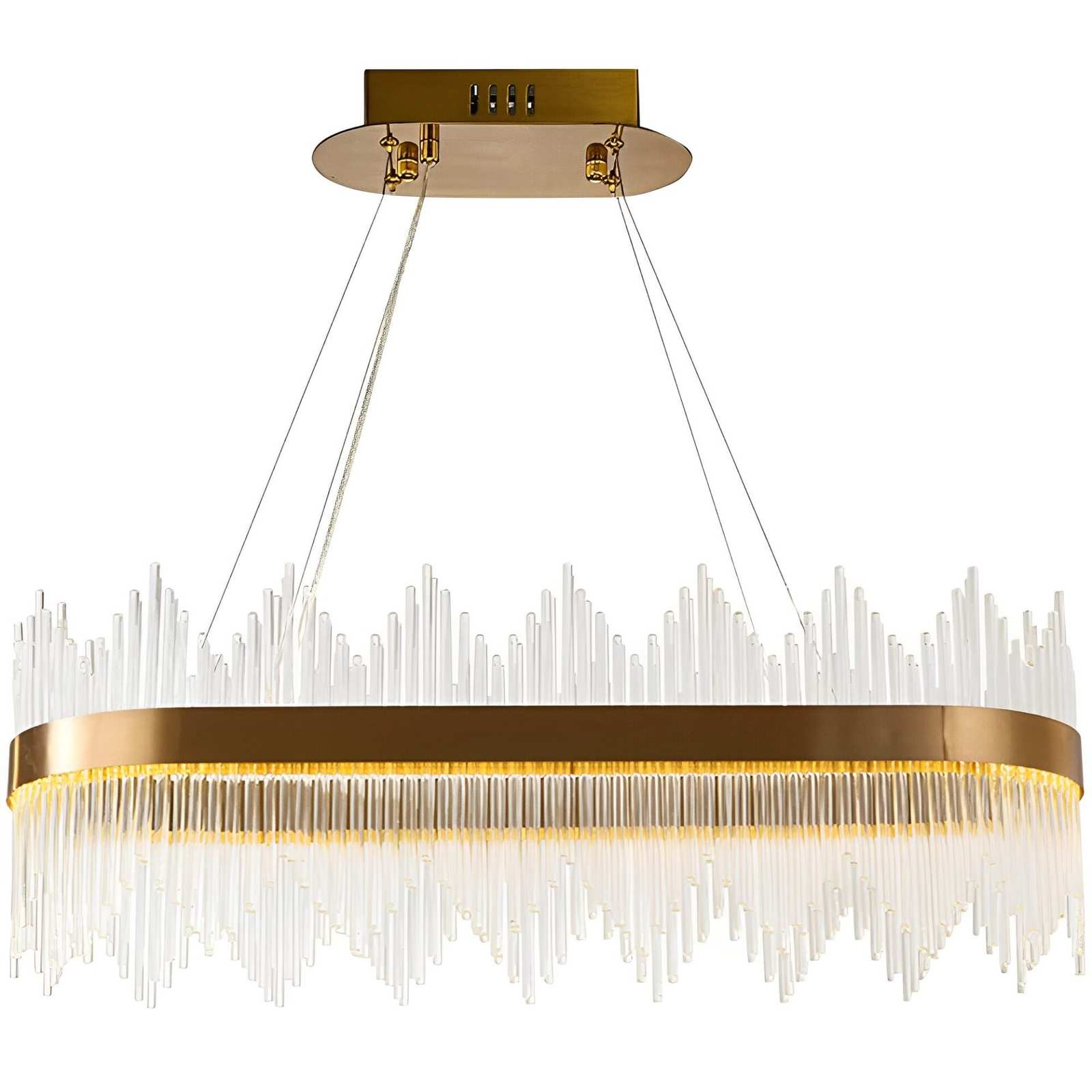
Crystal chandeliers are bought for one reason above all others: sparkle. So it is a real shame that the two most common things people do to them — fitting the wrong LED bulb, or leaving the whole thing switched off to save money — quietly destroy the very effect they paid for. Both are easily fixed, and neither means going back to hot, expensive halogen.
Here is what actually makes the crystal sparkle, the exact bulb to fit, what one genuinely costs to run in 2026, and how to size and hang it so it looks deliberate rather than dropped in. If you are shopping for a new one, our range runs from compact hallway fittings to statement dining pieces — but the advice below matters just as much for the one already on your ceiling.
Why crystal chandeliers sparkle — and what kills it
The sparkle has almost nothing to do with the crystal simply sitting there and everything to do with refraction: light bending as it passes through each cut facet, splitting into sharp little points that scatter across the ceiling and walls. Refraction needs a small, bright, clear point of light to work. A bare clear filament throws hard light into the facets and you get that glitter. Soften the source and the whole effect collapses.
That is exactly what a frosted, opal or “pearl” bulb does — and what most cheap LED candle bulbs do, hiding a flat chip behind a milky diffuser. The light leaves the bulb already spread out and even. Even light is lovely on a bedside lamp. On crystal it is the enemy: no bright point, no refraction, no sparkle — just a dull cluster of glass. When people say their chandelier “lost its sparkle when we went LED”, it was never the LED. It was the frosted LED.
The LED candle bulb to actually buy
Get the light source right and everything else follows. For a crystal fitting you want a clear-glass LED filament candle bulb: the fine LED filaments read as a bright, narrow line of light, close enough to the old incandescent point source to keep every facet working. Always choose clear over frosted for crystal. Then check the details:
- Cap/base: confirm it before you order. Most UK crystal chandeliers take E14 (small screw, SES); some use E27 (larger screw) or a B22/B15 bayonet, and many modern designs use tiny G9 capsules. The wrong cap simply will not fit. For G9, clear LED capsules exist — avoid the milky ones and accept the sparkle is a touch softer than a filament candle.
- Brightness: a 4W LED filament candle gives roughly 470 lumens — the equivalent of the old 40W incandescent. On a multi-arm chandelier you rarely want more per lamp; the effect comes from many small sources, not brute output from each one.
- Colour temperature: 2700K warm white is the traditional chandelier glow and flatters both the room and the crystal. 3000K is a slightly cleaner white if you prefer it. Avoid 4000K and above — cool white makes crystal look blue and clinical and throws away the warmth that makes the fitting feel expensive.
- Colour rendering (CRI): look for CRI 90 or higher. It makes skin, food and the crystal itself look richer, which is well worth it over a dining table.
- Dimmable: if the chandelier is on a dimmer — and it should be, it is the single best upgrade for atmosphere — buy bulbs marked dimmable and match them all to one brand to avoid flicker and buzz.
What a crystal chandelier really costs to run in 2026
This is where most of the fear sits, and it is well out of date. Older chandeliers were sold with a fistful of 40W incandescent or 28W halogen candle bulbs, and an eight-arm fitting at 40W each is 320W — genuinely expensive to leave on all evening. But those bulbs are gone: the UK phased out mains halogen from September 2021, with the last halogen capsules leaving shelves in 2023, so your replacements are LED whether you like it or not. (See the government’s halogen phase-out announcement for the detail.)
Here is the maths that matters. Swap an eight-arm chandelier from 40W incandescent (or 28W halogen) candles to 4W LED filament candles and the load drops from roughly 224–320W to about 32W. Run it four hours a night, and at the July 2026 price cap of about 26p per kWh, that is around £70–£110 off your yearly bill from that one fitting — before you count LED bulbs lasting years rather than months. The Energy Saving Trust puts LED at roughly 80% less energy than the bulbs it replaces, which is exactly what that sum reflects.
So the honest position: a crystal chandelier full of LED filament candles costs about the same to run as a single old-fashioned lightbulb left on. Stop rationing it and use it.
Getting the size and hanging height right
The most common sizing mistake is going too small — a chandelier that looked huge in the showroom disappears in a real room. Two rules of thumb do most of the work:
- Diameter: add the room’s length and width in feet and aim for roughly that figure in inches. A 12ft × 14ft living room (26) suits a chandelier around 26 inches — about 66cm — across.
- Over a dining table: ignore the room and size to the table. The chandelier should be about half to two-thirds the table’s width, centred over it, with 30–36 inches (76–91cm) of clear space between the tabletop and the bottom of the fitting so it lights the table without blocking faces.
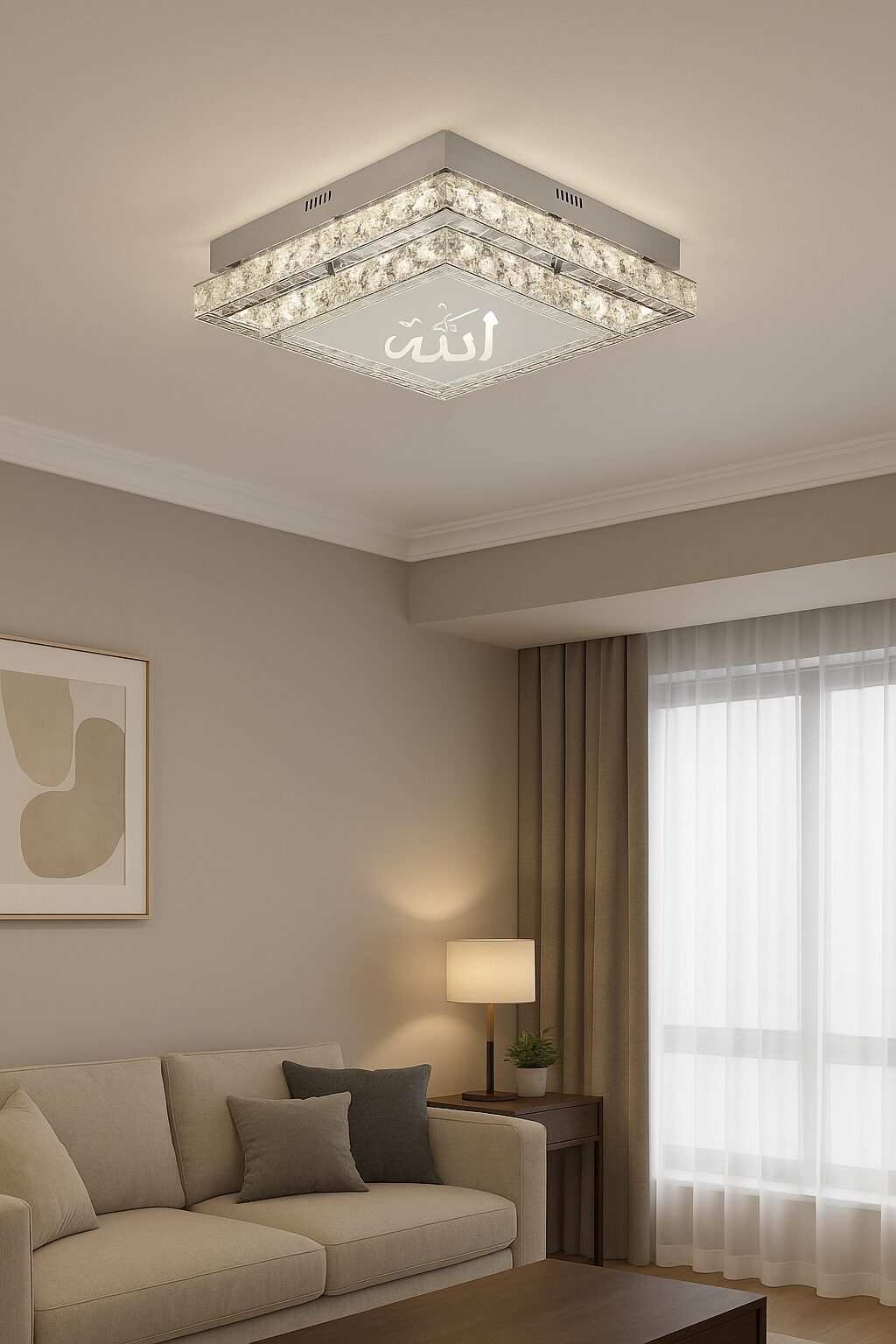
For height, keep the bottom of the fitting at least 7 feet (2.1m) above the floor in a hallway or over stairs so no one walks into it; on a double-height stairwell, hang it so the main body sits around first-floor window level. As a rough guide to the fitting’s own depth, allow about 2.5–3 inches of chandelier height for every foot of ceiling. If your ceilings are on the low side, a compact flush crystal fitting or a pendant light will sit better than a tiered chandelier everyone has to duck under.
The quick pre-flight check
Before you switch anything on, run through this:
- Clean the crystal. Dust is the sparkle-killer nobody mentions — a “tired” chandelier is very often just a dirty one.
- Fit clear LED filament candles: right cap, 2700K, CRI 90+, dimmable if it is on a dimmer.
- Size to the room, or to the table — never to the showroom.
- Put it on a dimmer if it is not already.
Browse our full range of chandeliers and the matching LED filament candle bulbs to light them properly, with free UK delivery over £50. Not sure on cap type or size? Send us a photo and the room dimensions and we will check before you order.
The one thing to remember: get the light source right and a crystal chandelier does the job it was actually designed for — throwing light around the room instead of just hanging there. That scatter of light is the point of the crystal. Everything else is decoration.