


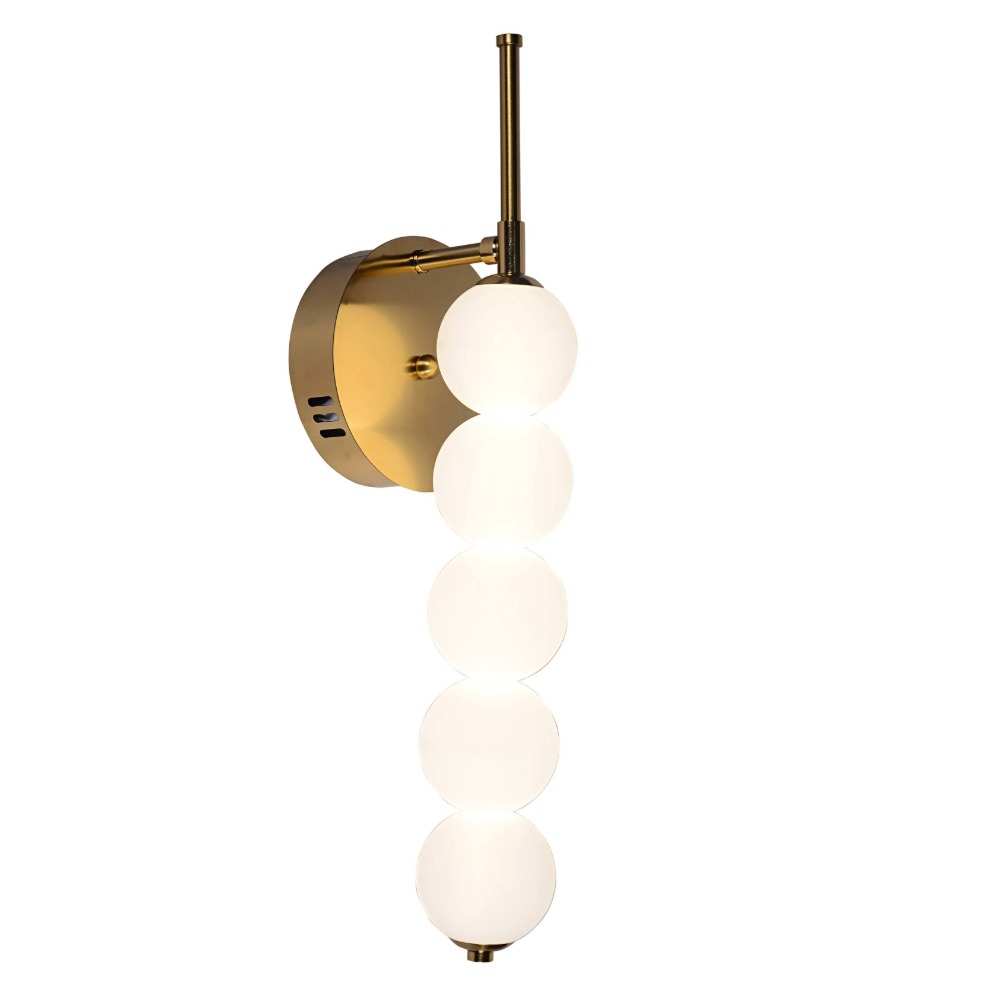
Wall lights are the quiet fix for a room that feels flat — but they are also the fitting people most often put in the wrong place. Get the height wrong, or buy a design that glares straight into your eyes from the sofa, and even an expensive fitting looks like a mistake. It is July, the evenings are long, and your lighting is probably the last thing on your mind. That makes now the smart time to sort it, before the clocks go back and you are living by artificial light again.
This is a straight guide to the two decisions that actually matter: how high to fit wall lights, and how to power them without necessarily calling out an electrician. Everything else — style, finish, crystal or matt black — is the easy part.
What wall lights do that a downlight can’t
A ceiling full of downlights lights the floor and your worktops, but it leaves the walls dark. Dark walls read as a dark room, however many watts are blazing overhead — the classic “bright but gloomy” effect. Wall lights fix that by throwing light onto vertical surfaces, which is what your eye actually reads as brightness. They also add a second, lower layer of light for the evening, when you do not want the full ceiling on.
That is why designers use them to wash a chimney breast, frame a bed or a mirror, and give a hallway a finished, hotel-like feel. A well-placed pair of wall lights will change a room more than swapping the main pendant ever will. You can browse the indoor wall lights we stock, from modern up-and-down fittings to crystal — but read the next two sections before you buy anything.
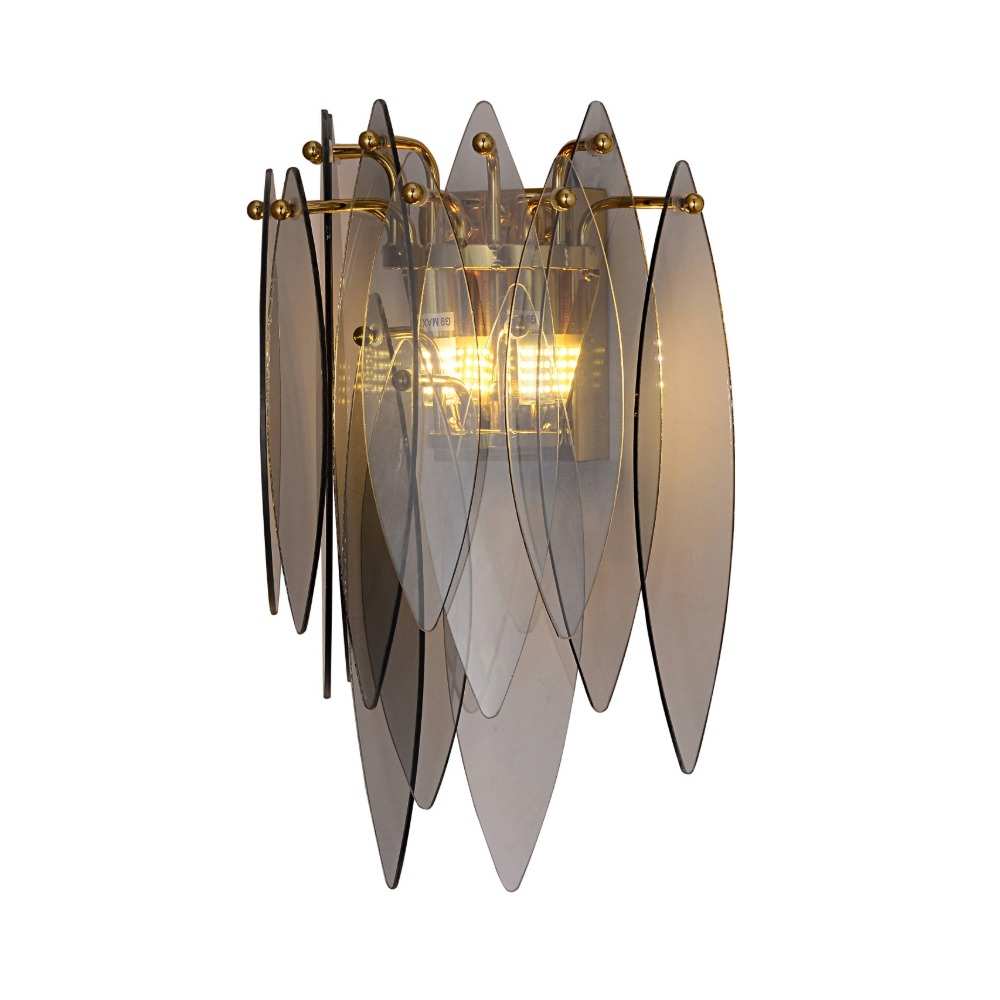
How high should wall lights go?
The honest answer is “about two-thirds of the way up the wall” — roughly 1.5 to 1.7 metres to the centre of the fitting on a standard 2.4m wall. That is the number most guides give, and then they stop. The catch is that it is only right for a wall you walk past. For a wall you sit beside, it is usually too high.
Here is the rule worth remembering: mount the light so its brightest part sits above or below your eyeline when you are actually using the room, never level with it. A fitting at 1.6m is fine in a hallway where you stand, yet a glare bomb next to a sofa where your eyes sit at about 1.1m. When in doubt, choose an up-and-down fitting or one with a shade or frosted diffuser, and drop it slightly.
Sensible starting heights, measured to the centre of the fitting:
- Living room, general: 1.5–1.6m, with a shielded or up/down design so a seated person never sees the bare lamp.
- Either side of a bed: about 1.5m, or roughly 55–60cm above the mattress, so the pool of light lands on your book, not your face. An adjustable or swing-arm fitting beats a fixed one for reading.
- Hallway and landing: 1.7–1.8m, spaced every 2.5–3m so the pools of light overlap instead of leaving dark gaps.
- Beside a mirror: at eye level, about 1.6m, one each side. Side-lighting a face kills shadows far better than a single light above it.
- Picture light: mounted just above the top of the frame and angled down onto the artwork.
Do you need an electrician? Three ways to power a wall light
This is the hidden cost nobody mentions in the style guides. A wall light needs power, and where that power comes from decides whether this is a £40 job or a £250 one.
Hardwired. The neatest, most permanent option, and the one most people picture. But in an existing plastered wall it means chasing a channel for the cable, running it back to a switch, then patching the plaster and redecorating. The fitting might be cheap; the labour and the making-good are not. Use a qualified, Part P–registered electrician, and remember that bathrooms carry extra rules on zones, IP ratings and notifiable work.
Plug-in or swing-arm. A fitting with a flex that runs to a socket or a fused connection unit. No chasing, no replastering, and ideal beside a bed or in a rented home. You will see the cable, but it can be run neatly in slim trunking or as a fabric flex down to the socket. It is the most under-rated option for bedroom bedside lighting.
Rechargeable and cordless. Battery wall lights used to be a compromise; they are not any more. Modern cordless LED wall lights clip to a magnetic bracket, recharge over USB-C, often switch between three colour temperatures and dim, and run for hours or weeks depending on use. For renters, awkward walls with no wiring, or a picture you want lit tomorrow, they are the pragmatic answer — we stock rechargeable picture wall lights for exactly this. The trade-offs are honest ones: you recharge them now and then, and the output is lower than a wired fitting.
Up, down, glare and colour: getting the light right
Once height and power are settled, three specification details separate a wall light that flatters a room from one that fights it.
Beam direction. Up-and-down fittings throw one beam at the ceiling and another at the floor, grazing the wall — great for hallways and modern spaces. A single downward wash suits a picture or a headboard. Match the beam to the job rather than buying on looks alone.
Colour temperature. For living rooms, bedrooms and hallways, stick to 2700K warm white. The Energy Saving Trust classes 2700K as the tone closest to the old incandescent glow, and it suits living areas far better than a cooler 4000K, which looks clinical indoors. If the light will fall on artwork or faces, choose a lamp with a colour rendering index (CRI) of 90 or more.
Dimming. Do not assume a wall light dims. Many integrated LED fittings are fixed output, and even a dimmable one needs an LED-compatible trailing-edge dimmer to run without flicker. Check that the fitting, the driver and the dimmer are all compatible before you buy — or add a smart bulb or switch to gain control without rewiring.
Where wall lights earn their keep
If your budget stretches to only one or two pairs, put them where they do the most work:
- The staircase and hallway. The single biggest transformation. Low, even wall light turns a dark corridor into something that feels designed.
- Either side of the bed. A bedside pair frees up the nightstand and gives you proper reading light without the “big light” overhead. Our bedroom lighting range is a good place to start.
- The living-room chimney breast or sofa wall. Fittings here give you a warm, low evening layer for watching television, without the glare of overhead downlights.
- Beside a bathroom mirror. Two fittings flanking the mirror beat a single light above it for shaving and make-up — just match the bathroom fitting’s IP rating to the zone.
The one thing to get right
If you remember nothing else: fix the height to your eyeline, not to a number off the internet, and decide how you are powering the light before you fall for a finish. Do that and the running cost is almost an afterthought — a pair of 6W LED wall lights left on for four hours every evening costs under £5 a year at the July 2026 price cap of around 26p a unit.
Ready to choose? Browse our full range of indoor wall lights — modern, crystal and filament, all energy-efficient LED — with free UK delivery on orders over £50.